Owe no one anything, except to love one another; for the one who loves another has fulfilled the law. The commandments, “You shall not commit adultery; You shall not murder; You shall not steal; You shall not covet”; and any other commandment, are summed up in this word, “Love your neighbor as yourself.” Love does no wrong to a neighbor; therefore, love is the fulfilling of the law. Romans 13:8-10 NRSV
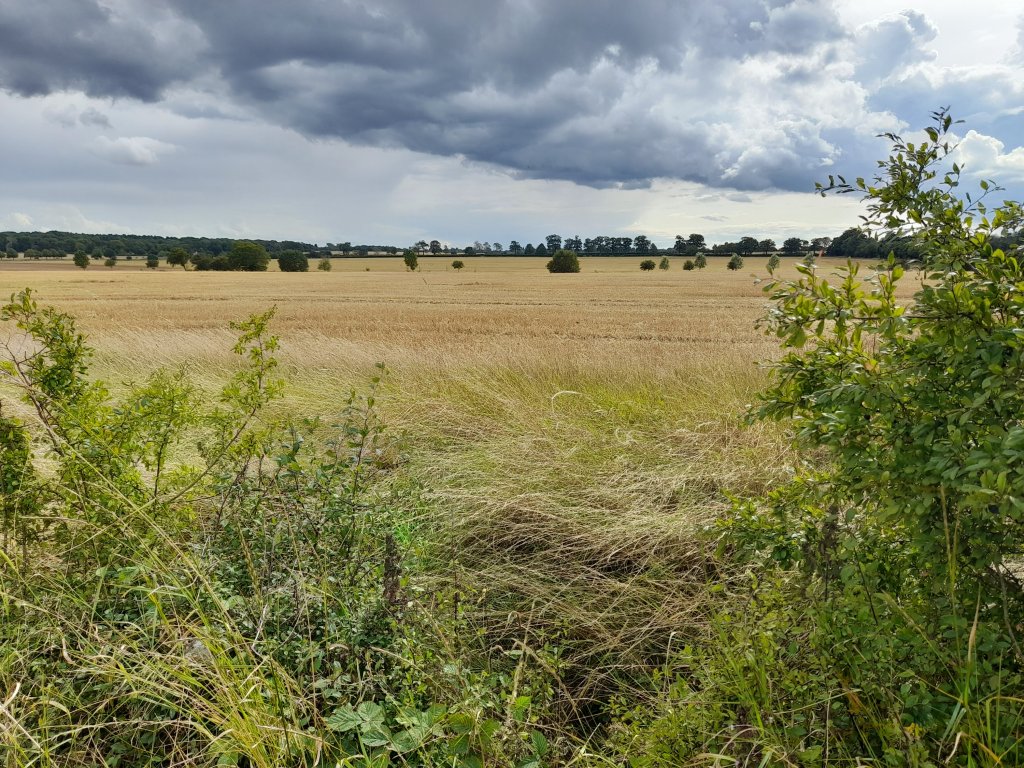
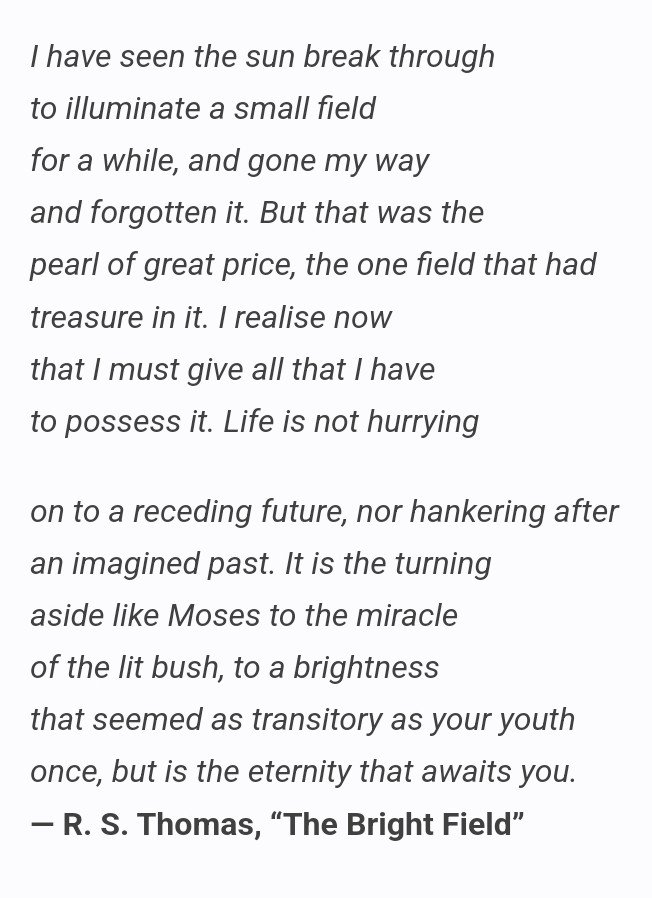
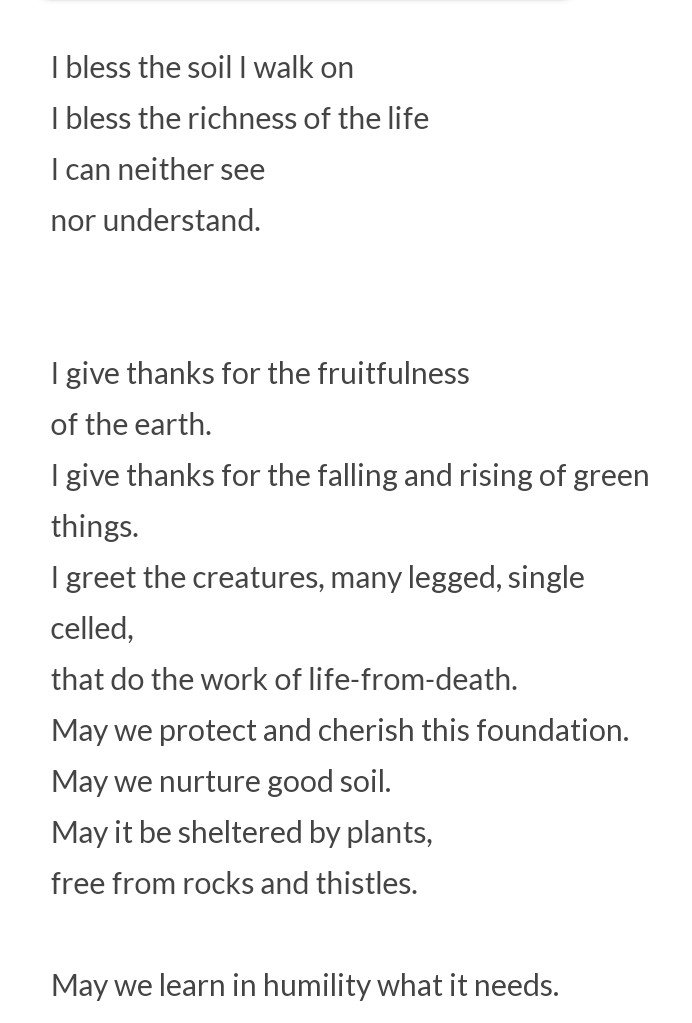
As we manage another heatwave, thinking about creation and how we care for it as we see nature’s harvest and the fields yielding their grain, we thought about our place and our lives. What we possess and what we own drives us and maintains the economy that keeps us served. But how are we to live when our culture is so bound up in vanities? What we bin here is out of sight and out of mind.
Living life to the full is complex. We are to take joy and pleasure in the now, but there are consequences. Loving ourselves, caring for ourselves, was something we pondered and caring for where we live and each other.
We are blessed with a fruitful land and may not be wealthy, but we have enough.
Give your servant therefore an understanding mind to govern your people, able to discern between good and evil; for who can govern this your great people?”
And so the story cycle begins again with Solomon. Just as reading bits of Job would give you totally the wrong end of the stick, reading this portion might make you think Solomon was a good guy. He wasn’t.
The clue is in the phrase, “…discern between good and evil”
And the Lord God commanded the man, “You may freely eat of every tree of the garden; but of the tree of the knowledge of good and evil you shall not eat, for in the day that you eat of it you shall die.” Genesis 2:16-17 NRSV
Arguably, every history in the Bible comes back to Eden; the garden temple at whose heart is the Holy of Holies – the trees. The garden is to be tended around the trees of life and knowledge. These trees are not to be possessed but are at hand, God’s portion. Their presence perfects. Once the fruit is grasped, it is lost.
And so with the Promised Land, the Law of Moses, and here Solomon. Solomon begins the cycle of bad and not so bad kings by causing Israel’s fragmentation. It does not end well. Each is held, grasped, and lost.
And what about Psalm 119. If you read only,
Your decrees are wonderful; therefore my soul keeps them. The unfolding of your words gives light; it imparts understanding to the simple. With open mouth I pant, because I long for your commandments. Turn to me and be gracious to me, as is your custom toward those who love your name. Keep my steps steady according to your promise, and never let iniquity have dominion over me. Redeem me from human oppression, that I may keep your precepts. Make your face shine upon your servant, and teach me your statutes. My eyes shed streams of tears because your law is not kept. Psalms 119:129-136 NRSV
There is a reason for the Psalmist’s desire and ire. He is lost. We need the whole story.
Then look at Paul, who writes,
… the Spirit helps us in our weakness; for we do not know how to pray as we ought, but that very Spirit intercedes with sighs too deep for words. And God, who searches the heart, knows what is the mind of the Spirit, because the Spirit intercedes for the saints according to the will of God. Romans 8:26-27 NRSV
It is Jesus who breaks this story cycle and in a way we cannot grasp. In him, the story ends, and the accuser is vanquished because if what is in our hearts. We are loved: God is with us in every joy and trouble and for us, so that through his faithfulness and our beloving, our believing, all is made well.
And so Jesus teaches about the Kingdom… Matthew 13:31-52.
The pastures of the wilderness overflow, the hills gird themselves with joy, the meadows clothe themselves with flocks, the valleys deck themselves with grain, they shout and sing together for joy. Psalms 65:12-13 NRSV
For you shall go out in joy, and be led back in peace; the mountains and the hills before you shall burst into song, and all the trees of the field shall clap their hands. Isaiah 55:12 NRSV
For those who live according to the flesh set their minds on the things of the flesh, but those who live according to the Spirit set their minds on the things of the Spirit. To set the mind on the flesh is death, but to set the mind on the Spirit is life and peace. Romans 8:5-6 NRSV
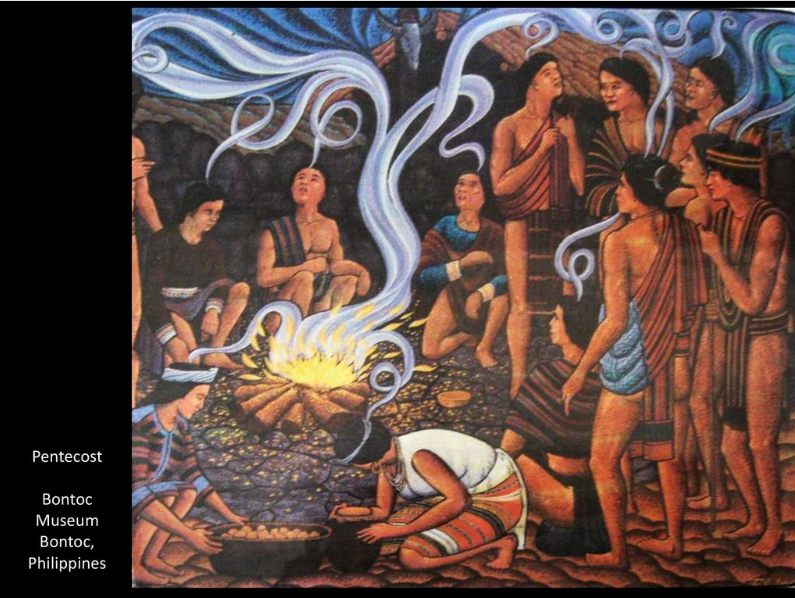
When the day of Pentecost had come, they were all together in one place. And suddenly from heaven there came a sound like the rush of a violent wind, and it filled the entire house where they were sitting. Divided tongues, as of fire, appeared among them, and a tongue rested on each of them. All of them were filled with the Holy Spirit and began to speak in other languages, as the Spirit gave them ability. Acts 2:1-4 NRSV
This event for me speaks of the deeper reality of creation and parallels the transfiguration narrative of Jesus: this was the revelation of the church as it is. In this narrative we see the true nature of the church revealed.
As a Christian, I see in scripture a hidden reality, a reality where Jesus walks on water, calms the storm, feeds thousands, and raises Lazarus from the dead. It is a created reality where, in the life of Jesus, time is wrapped up in the event of the cross. A reality where resurrection brings the future into the present. This reality is not only the reality of spacetime but the reality of kingdoms.
There are three kingdoms that spring to mind, in addition to the kingdom of heaven, there is the kingdom of this world, or the kingdom of me, and the kingdom of Satan.
Each kingdom bends and forms the universe, each held in God. The Kingdom of heaven brings light, Satan darkness. In the kingdom of this Earth, the kingdom of me, gravity, chance and time, prayer, and action operate.
And in Jesus, we see mystery revealed as the kingdom of heaven breaks through. At Pentecost, the kingdom is revealed and shakes the ground and breaths like a wind, appearing as tongues of flame on each follower of the risen Jesus.
What is revealed is the current reality. The church is the body of Christ, and Pentecost transfigures the little children; followers of Jesus. This inauguration, and every breakthrough of the Kingdom of God in our lives, opens our eyes to the purpose we have, to love God and one another, not to worry, to forgive and love our enemies. We are empowered to obey the words of Jesus and to love and serve the world.
The kingdom of God always pervades and governs the whole of the physical universe – parts of planet earth occupied by humans and other personal beings. p 26
God’s own “kingdom,” or “rule,” is the range of his effective will, where what he wants done is done. The person of God himself and the action of his will are the organizing principles of his kingdom, but everything that obeys those principles, whether by nature or by choice, is within his kingdom…. We have an invitation to be a part of it, but if we refuse, we only hurt ourselves. p 25
Creation Untamed: The Bible, God, and Natural Disasters, by Terence E. Fretheim
That human sins, including the sins of violence, have consequences, including violence (see Gen. 6:11-13), is testimony to a functioning of the moral order, and this reality can be named the “judgment” of God.”
More than Matter, by Keith Ward
The material universe is perhaps more like an organism than like a repetitive machine. Whereas an older generation of scientists and philosophers thought the universe was like a watch, many now regard the universe as more like a large organism. It grows and develops, and its first stages can only be properly understood when its completely developed state is perceived.” … it is a basic mistake of reductive materialism to try to explain everything in terms of its simplest elements–as though a large enough group of such simple elements just had to be mixed up at random for a long time, and would then produce brains, thoughts, and the theory or relativity.” (Keith Ward, More than Matter, p. 83-84)
Yes, really on the cross, Jesus asks his Father to forgive those who had put him on the cross, as they did not know what they had done. And, the first martyr, Stephen is dragged out of the city and stoned by the leaders and asks the same, though they knew exactly what they had done. This is the context of our reading of scripture and our knowing Jesus; our ideas of justice and mercy are turned on their head, redeemed.
While they were stoning Stephen, he prayed, “Lord Jesus, receive my spirit.” Then he knelt down and cried out in a loud voice, “Lord, do not hold this sin against them.” When he had said this, he died. Acts 7:59-60 NRSV
This gives us confidence to have the same perspective.
Like newborn infants, long for the pure, spiritual milk, so that by it you may grow into salvation— if indeed you have tasted that the Lord is good. Come to him, a living stone, though rejected by mortals yet chosen and precious in God’s sight, and like living stones, let yourselves be built into a spiritual house, to be a holy priesthood, to offer spiritual sacrifices acceptable to God through Jesus Christ. 1 Peter 2:2-5 NRSV
In Christ, we are gathered priests of redemption. Our purpose is to redeem, and in Jesus live a way of truth that is found in knowing Jesus: live redeemed and redeem. We are freed from condemnation and together, serve one another. The love we show, draws people to God.
Jesus enables us. When Thomas and Philip question Jesus about how they are to know this way and see God, he answers,
Do you not believe that I am in the Father and the Father is in me? The words that I say to you I do not speak on my own; but the Father who dwells in me does his works. Believe me that I am in the Father and the Father is in me; but if you do not, then believe me because of the works themselves. Very truly, I tell you, the one who believes in me will also do the works that I do and, in fact, will do greater works than these, because I am going to the Father. I will do whatever you ask in my name, so that the Father may be glorified in the Son. If in my name you ask me for anything, I will do it. John 14:10-14 NRSV







 Takeley Chapel
