
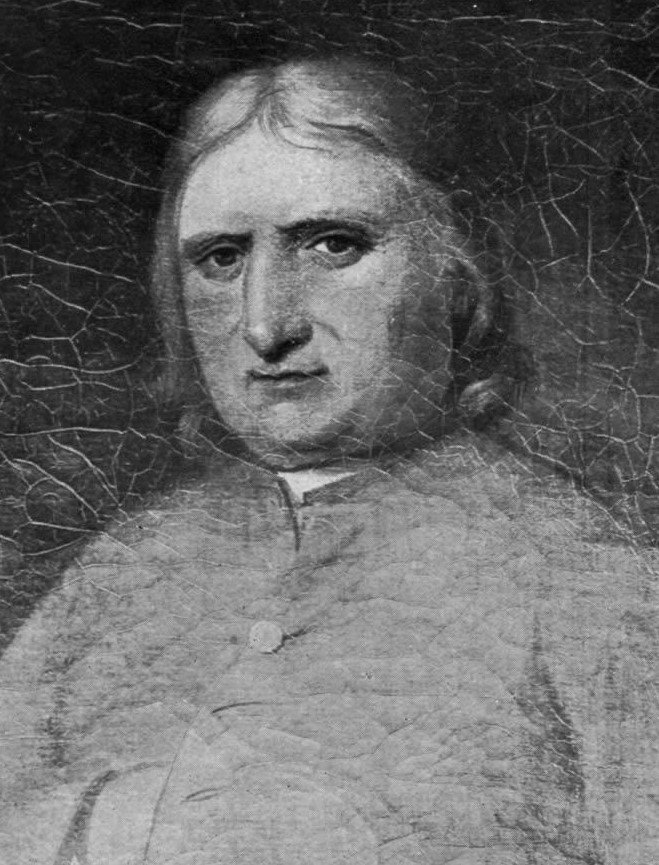
To say that the grace of the community formed at Takeley Chapel was informed by a 17th Century mystic, George Fox ( https://en.wikipedia.org/wiki/George_Fox) and his followers, especially Isaac Pennington and James Nayler might sound peculiar. We were a peculiar people in many ways, but the essential nature of the teachings have remained. I hope in what follows you will see how of the moment the message is, how it embraces all Christians, forging a middle way between competing dogmas, that challenges power especially in the government of the church, and how it frees all to be fruitful and have a voice. It is incarnational Christianity that excludes no one.
I am going to let two contemporary papers do the talking for me and link to an article I wrote in 2016.
“Let the holy seed of life reign” Perfection, Pelagianism, and the early Friends
John Connell
https://quakertheology.org/perfection-pelagianism-early-quakers/
“Is our will actually free and able to make moral choices? Can we choose to cleave to God in the strength of our free will? Or is the will in bondage to our depraved natures, and incapable of choosing to cleave to God unless supernaturally aided?”
George Fox taught,
“That God is light, and in him is no darkness at all; and that he has sent his son a light into the world, to enlighten all men in order to salvation; and that they that say they have fellowship with God, and are his children and people, and yet walk in darkness, (viz. in disobedience to the light in their consciences, and after the vanity of this world,) they lie and do not the truth. But that all such as love the light, and bring their deeds to it, and walk in the light, as God is light, the blood of Jesus Christ his son should cleanse them from all sin.’”
(George Fox, “Journal of Historical Account of the Life, Travels, Sufferings, of George Fox,” InWorks of George Fox,Vol. 1, 1831 [Digital Quaker Collection], 26.)
“Now death having passed over all men, and all were concluded under sin, and all died in Adam, so that condemnation must come upon all men, so that all were baptized or plunged into death, sin, and evil, by disobedience to God’s command and ordinance.”
(George Fox, “Election and Reprobation Clearly Discovered, and the ignorance of many concerning Election and Reprobation of persons, Manifested.” InWorks of George Fox,Vol. 5, 1831 [Digital Quaker Collection], 410.)
“Like Fox, Penn wholeheartedly rejected notions that Christ’s death persuaded God to pardon human sins, and that this pardon was divinely transferred, or imputed, to believing humans. …this rejection of imputation was because he viewed these theories as deceptive ideas that encouraged complacency in regards to one’s own sin, and that they were foreign to the teaching of scripture.”
Of humanity Barclay writes,
“Even his thoughts of God and spiritual matters are unprofitable to himself and others until he has been disjoined from this evil seed and has been united to the Divine Light.”
(Robert Barclay,Barclay’s Apology in Modern English,edited by Dean Freiday (Newberg, OR: Barclay Press, 1991), 66.)
“If our wills are indeed corrupted by our depravity so as to be unable to move towards God without his pre-emptive aid, does that not make our salvation a predestined product of God’s will alone..?”
Fox writes,
“But if they walk despitefully against the spirit of grace, that is poured upon all flesh, they go into reprobation and condemnation, from the election; and then God is just in judging them, according to his mercy upon all, and his grace that hath appeared unto all, that would teach all, and bring their salvation.”
(Fox, Election and Reprobation.)
“…This appears to suggest that for Fox, election is the starting position for all at some point unless actively resisted. That all people receive grace unconditionally via the light, and do so by the sovereign will of the Creator and through no action of their own. However response to that light is not compulsory, either by virtue of God’s sovereign decree or the limitations of their depraved nature; but rather is left to the creature whom may choose whether or not to resist it. Thus, culpability for humans is found in a negative or resistive response to grace, as opposed to merit being assigned to the individual for a positive choice to actively exercise belief.”
John 1:1-5 NRSV
[1] In the beginning was the Word, and the Word was with God, and the Word was God. [2] He was in the beginning with God. [3] All things came into being through him, and without him not one thing came into being. What has come into being [4] in him was life, and the life was the light of all people. [5] The light shines in the darkness, and the darkness did not overcome it.
https://bible.com/bible/2016/jhn.1.1-5.NRSV
Ephesians 2:8-10 NRSV
[8] For by grace you have been saved through faith, and this is not your own doing; it is the gift of God— [9] not the result of works, so that no one may boast. [10] For we are what he has made us, created in Christ Jesus for good works, which God prepared beforehand to be our way of life.
https://bible.com/bible/2016/eph.2.8-10.NRSV
Acts 7:51 NRSV
[51] “You stiff-necked people, uncircumcised in heart and ears, you are forever opposing the Holy Spirit, just as your ancestors used to do.
https://bible.com/bible/2016/act.7.51.NRSV
“…our regeneration is solely the work of God and his sovereign will, but our condemnation solely the work of our own free will.”
…in the words of George Fox,
“For God hath made all nations of men of one flesh, blood and mould, and would have them all to repent, and live to Christ; for they all died in Adam, and their minds are reprobated from God; but the election is in Christ, his grace: and so it lies in the two seeds, and not in persons.”
(Fox, Election and Reprobation.)
Genesis 3:15 NRSV
[15] I will put enmity between you and the woman, and between your offspring and hers; he will strike your head, and you will strike his heel.”
https://bible.com/bible/2016/gen.3.15.NRSV
Genesis 3:14-15 KJV
[14] And the LORD God said unto the serpent… I will put enmity between thee and the woman, and between thy seed and her seed; it shall bruise thy head, and thou shalt bruise his heel.
https://bible.com/bible/1/gen.3.14-15.KJV
“Most Puritans would have understood the seed of the woman to represent the entire human race descended from Adam as John Calvin had argued…, while the seed of the serpent is sin, or perhaps the followers of Satan. But Fox identifies the seed of the woman instead with the eternal Christ himself, and the seed of the serpent with our fallen and depraved natures inherited from Adam. “When you are born again, ye will know election and reprobation; for the election stands in Christ, the seed, before the world began; but the reprobation lies in the evil seed since the world began.”
…Rather than two external realities or entities in conflict, Fox understood the two seeds as internal to each individual. But the two seeds are clearly not of the same origin, and that appears to be what produces the conflict.”
“And therefore, all men being enlightened by Christ, who hath tasted death for all men; and God’s grace hath appeared unto all men, to teach, and bring their salvation; and he hath poured his spirit upon all flesh, and so his mercies are upon all; and therefore must all believe in this light, if they will be grafted into Christ Jesus, and receive the grace and the spirit, in their own hearts, at home, if they will come to the election in Christ, from whence this grace, light, truth and spirit comes;”
(Fox, Election and Reprobation)
Galatians 2:17-21 NRSV
[17] But if, in our effort to be justified in Christ, we ourselves have been found to be sinners, is Christ then a servant of sin? Certainly not! [18] But if I build up again the very things that I once tore down, then I demonstrate that I am a transgressor. [19] For through the law I died to the law, so that I might live to God. I have been crucified with Christ; [20] and it is no longer I who live, but it is Christ who lives in me. And the life I now live in the flesh I live by faith in the Son of God, who loved me and gave himself for me. [21] I do not nullify the grace of God; for if justification comes through the law, then Christ died for nothing.
https://bible.com/bible/2016/gal.2.17-21.NRSV
“… all who have faith are fed and nourished with eternal life. . . where the seed is received in the heart and allowed to bring forth its natural and proper effect, Christ is resurrected and takes shape as the new man which the scriptures so often speak of: Christ within, the hope of glory.”
(Robert Barclay,Barclay’s Apology in Modern English,edited by Dean Freiday (Newberg, OR: Barclay Press, 1991))
“This is a truly radical interpretation of incarnational Christianity. Oneness with Christ is achieved through the spiritual and volitional proxy of the seed. Direct access is available not through the application of scripture reading, nor the vicarious celebration of the sacraments, nor even the intercessory work of the priesthood. But rather it is achieved through a true union with Christ via a giving over of self-will to the internal testimony of the divine will.”
Romans 12:2 NRSV
[2] Do not be conformed to this world, but be transformed by the renewing of your minds, so that you may discern what is the will of God—what is good and acceptable and perfect.
https://bible.com/bible/2016/rom.12.2.NRSV
Galatians 3:28-29 NRSV
[28] There is no longer Jew or Greek, there is no longer slave or free, there is no longer male and female; for all of you are one in Christ Jesus. [29] And if you belong to Christ, then you are Abraham’s offspring, heirs according to the promise.
https://bible.com/bible/2016/gal.3.28-29.NRSV
The Seed and the Day of Small Things: Finding Power and Powerlessness in Quaker Theology
R Muers
(https://quakerstudies.openlibhums.org/article/id/15779/)
“Both in the Quaker texts and elsewhere, the language of the ‘seed’ is frequently used to hold together the biblical story from Genesis to Revelation and to focus attention on Christ’s decisive victory over evil.14 ’Seed’ places a focus on the intense struggle arising from the juxtaposition of Christ’s proclaimed victory and the continued effects of suffering and evil – a struggle experienced on all levels, from the individual to the political and social.”
“…The language of the seed points to women’s empowerment as preachers and teachers,…”
Something old: Rom. 9:18 and Isaac Penington
(https://memlynhumphries.com/2016/05/02/something-old-rom-918-and-isaac-penington/ )




 Takeley Chapel